Kepler habitable

Monday, April 3, 2017

Erta Ale volcano (Ethiopia) activity update: eruption continues from both summit and flank lava lake


Erta Ale (Ethiopia) volcano news:

Erta Ale volcano (Ethiopia) activity update: eruption continues from both summit and flank lava lake

Sunday Apr 02, 2017 17:04 PM | BY: T


Erta Ale's eruption on SENTINEL 2 satellite imagery on March 30th (image: SENTINEL2 / ESA-Copernicus data; Composition / annotations: Culture Volcan)

Erta Ale's eruption on SENTINEL 2 satellite imagery on March 30th (image: SENTINEL2 / ESA-Copernicus data; Composition / annotations: Culture Volcan)
The flank lava lake and boundaries of the area covered by lava overflow since 10 March (image: SENTINEL2 / ESA / Copernicus; Composition / annotations: Culture Volcan)

The flank lava lake and boundaries of the area covered by lava overflow since 10 March (image: SENTINEL2 / ESA / Copernicus; Composition / annotations: Culture Volcan)
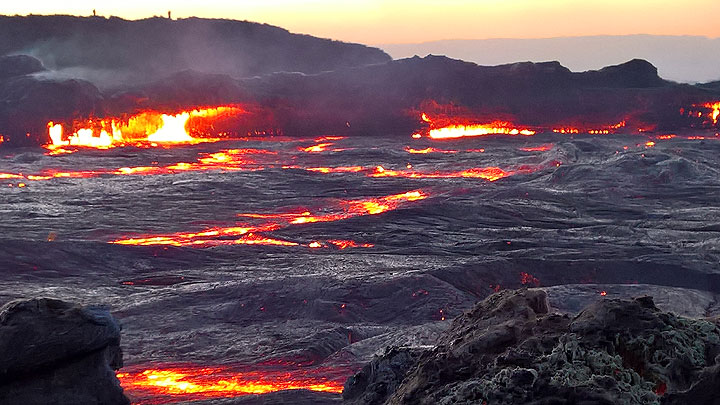
The activity remains very elevated at the volcano. Since the start of the (still ongoing) flank eruption in January, a second lava lake has formed at the flank eruption site and a growing lava field is active about 2-3 km northeast of it. 


According to ground information and fresh high-resolution satellite imagery analyzed by Culture Volcan, the eruption continues to be significant and occurs from both the summit (lava lake in the southern pit crater) AND the fissure eruption site on the southern rift axis. 

The summit lava lake, which first had dropped to about 100 m depth at the beginning of the flank eruption, had again risen to 40-50 m below its rim when observed by our latest group to the area in late February. The collapsed northern crater showed a short-lived heat signal around 10 March, suggesting a brief phase of activity (lava effusion ?) there, but this seems to have ceased. 

The most significant activity is occurring on the southern rift at the site of the 21 Jan fissure eruption. The vents feed both a large second lava lake, approx. 175x80m wide, and a growing lava flow field to the northeast, with a width of approx. 1500 m and its most advanced from about 3500 m distance. 

A gap in thermal signal between the lava lake and the active flow field, likely pahoehoe type similar to Kilauea volcano on Hawaii, suggests that the lava flows through a tube on the first part of the distance to the front. 

Successive overflows of the flank lava lake seem to have progressively built up a vast, broad shield around it. Judging from satellite data, overflows from the lake have covered an area of almost 1 million square meters.

---

Links / Sources:


Previous news


Wednesday, Feb 08, 2017
A story in pictures of Erta Ale volcano's intense lava lake overflowing phase as witnessed by participants from our recent Volcano Special tour during 16-19 January 2017. ... [more]
NASA Earth Observatory image of Erta Ale on 26 Jan 2017, by Joshua Stevens, using Landsat data from the U.S. Geological Survey. Caption by Adam Voiland.


Friday, Jan 27, 2017
A new Landsat 8 satellite image from yesterday published by Nasa's Earth Observatory site shows the location of the new flank eruption at Erta Ale. ... [more]
Hot spots on Erta Ale's caldera (MODIS data, Univ. Hawai'i)


Thursday, Jan 26, 2017
The flank eruption has been confirmed and it is still going on strong. ... [more]
Hot spots on Erta Ale - the reported flank eruption is not (yet) visible (MODIS data, Univ. Hawai'i)


Wednesday, Jan 25, 2017
News have come in about a fissure eruption at the SE flank of the volcano, approx. 7 km distance from the summit caldera and its lava lake (which partially collapsed on and after 20 Jan). ... [more]
The lava lake overflowing on all sides on 17 Jan 2017 (Photo: Enku Mulugeta)


Tuesday, Jan 24, 2017
The volcanic activity at the shield volcano in the Danakil desert has been at extraordinary and very elevated levels recently. Participant returning from our recent eruption special tour (14-20 Jan) reported that during their stay 16-20 Jan, the lava lake's surface level has been undergoing rapid and large variations, producing massive lava lake overflows when high and intense spattering when low. ... [more]

Thursday, January 26, 2017

Erta Ale volcano (Ethiopia): massive lava lake overflows, collapses inside caldera

Erta Ale volcano (Ethiopia): massive lava lake overflows, collapses inside caldera: "Erta Ale volcano (Ethiopia): massive lava lake overflows, collapses inside caldera Tuesday Jan 24, 2017 14:24 PM | BY: T The lava lake overflowing on all sides on 17 Jan 2017 (Photo: Enku Mulugeta) Heat signal from Erta Ale showing the extreme peak since 19 Jan (MIROVA) Sentinel satellite image of the volcano's caldera on 19 Jan, showing the overflows in the days before and on 19 Jan itself (image: SENTINEL-ESA/Copernicus, annotations: Culture Volcan) The volcanic activity at the shield volcano in the Danakil desert has been at extraordinary and very elevated levels recently. Participant returning from our recent eruption special tour (14-20 Jan) reported that during their stay 16-20 Jan, the lava lake's surface level has been undergoing rapid and large variations, producing massive lava lake overflows when high and intense spattering when low. The activity generated a thermal signal that rose to 13 GW, a peak of approx. 100 times the normal average on 19 Dec and has stayed very high since! Following / accompanying this large surge in lava flow activity, several large collapses have been reported from both the also active northern crater and the lava lake itself on and since 20 Jan. It seems that the volcano is currently in a major phase reshaping itself. This is an eye-witness report from the activity during 17-19 Jan, which our participant Richard just sent in" "... Monday Jan 16 - after finishing a morning climb and breakfast we went into the caldera to watch a lava lake. We approached as close as 4m from the lava lake edge just observing a lava surface waving (30cm in amplitude). Lava waves were hitting the edge of the lake creating small fountains (1-2 m of height). Then we climbed the rest of a big hornito next to the pit. In 30 minutes the first over flow appeared on a western rim. ... In the afternoon other two lava rivers appeared on SW flank (the length ca 500 m). Tuesday Jan 17 - till midday the volcano was almost calm with the waving surface and small fountains. At about 1PM two overflows began on south rim and during the time the lava flows were intensifying. At 2 PM we went into the caldera to observe lava flows in close proximity. At about 3 PM other overflows appeared on NE and N flank and at last cca 70% of the lava lake rim was overflowed. I can hardly say it was overflow - it was a lava flood or an eruption. The volcano was producing about 200-300 m3 of fresh lava per second and it lasted cca 15 hours. The speed of the lava flows on the flank was 50-70km per hour and the lava covered about 1km2 of the surface inside the caldera. One of the lava flows stopped 60m in front of the camp cliff. What to say in the end - I have never seen so much lava during all my life including all documentary movies. It was absolutely amazing! Wednesday Jan 18 In the morning the all surroundings of the south pit (500-700 m in all directions) was covered with glowing lava and it was impossible to approach the caldera edge in SW part due to the glow. In the afternoon there were a sporadic overflows and the activity has changed. The lava lake level was fluctuating very fast (minutes) +- 10m. When in high level the short time overflows appeared, when in low level the activity was similar to Strombolian one - there were the fountains reaching up to 50-60m of the height. Really a good spectacle. Thursday Jan 19 Activity was the same as a previous day - big fountains with sporadic lava flows reaching 500m and the fluctuating lake level +-15m . We were so tired of the lava observation we started looking at outer flanks of Erta Ale. " (Our group left early on 20 Jan after 4 days camp on the rim). More news: fresh satellite imagery and collapses in the caldera A Sentinel 2 image from 19 Jan (attached) retrieved and commented by Culture Volcan shows the very large lava overflows that Richard described above, and occurred mainly during mainly on 17 Jan, half overlaid by a fresh flow from 19 Jan. Based on the satellite image, the new lava flows combined reached a length of a bit more than 1 km and extended more than 230 m, covering a surface of approx. 200 000 square meters. Photographer Oliver Grunewald was on the spot and reported (via Culture Volcan) that on the evening 20 Jan, explosions of very large gas bubbles occurred from the lava lake, with projections of lava spatter reaching to up to 30 m. More importantly, he observed that the caldera started to undergo large collapse phases, a sign that the intense output of magma has reached critical values of drained volumes from the magma reservoirs below, resulting in surface collapses (and making any stay inside the caldera extra dangerous now). One collapse affected the northern crater, where a new oval-shaped pit crater of 150 x 30 m dimension and 20 m depth formed during 24 hours. Another collapse affected the lava lake itself in the southern crater, doubling its size. The activity was accompanied by ash emissions that reached 7-800 m height, and lava flows have been covering much of the southern part of the caldera where the active pit craters are located. What will happen next at the volcano remains unknown, but current visitors of the volcano including those on our next tours to the Danakil are certainly in for once-in-a-lifetime show. If there is sufficient interest, we can also offer a new Erta Ale Special. All news about: Erta Ale volcano Information about: Erta Ale volcano --- Links / Sources: Très gros débordement du lac de lave à l'Erta Ale! (Culture Volcan) "

The lava lake overflowing on all sides on 17 Jan 2017 (Photo: Enku Mulugeta)

Erta Ale volcano (Ethiopia): massive lava lake overflows, collapses inside caldera

Erta Ale volcano (Ethiopia): massive lava lake overflows, collapses inside caldera: "Erta Ale volcano (Ethiopia): massive lava lake overflows, collapses inside caldera Tuesday Jan 24, 2017 14:24 PM | BY: T The lava lake overflowing on all sides on 17 Jan 2017 (Photo: Enku Mulugeta) Heat signal from Erta Ale showing the extreme peak since 19 Jan (MIROVA) Sentinel satellite image of the volcano's caldera on 19 Jan, showing the overflows in the days before and on 19 Jan itself (image: SENTINEL-ESA/Copernicus, annotations: Culture Volcan) The volcanic activity at the shield volcano in the Danakil desert has been at extraordinary and very elevated levels recently. Participant returning from our recent eruption special tour (14-20 Jan) reported that during their stay 16-20 Jan, the lava lake's surface level has been undergoing rapid and large variations, producing massive lava lake overflows when high and intense spattering when low. The activity generated a thermal signal that rose to 13 GW, a peak of approx. 100 times the normal average on 19 Dec and has stayed very high since! Following / accompanying this large surge in lava flow activity, several large collapses have been reported from both the also active northern crater and the lava lake itself on and since 20 Jan. It seems that the volcano is currently in a major phase reshaping itself. This is an eye-witness report from the activity during 17-19 Jan, which our participant Richard just sent in" "... Monday Jan 16 - after finishing a morning climb and breakfast we went into the caldera to watch a lava lake. We approached as close as 4m from the lava lake edge just observing a lava surface waving (30cm in amplitude). Lava waves were hitting the edge of the lake creating small fountains (1-2 m of height). Then we climbed the rest of a big hornito next to the pit. In 30 minutes the first over flow appeared on a western rim. ... In the afternoon other two lava rivers appeared on SW flank (the length ca 500 m). Tuesday Jan 17 - till midday the volcano was almost calm with the waving surface and small fountains. At about 1PM two overflows began on south rim and during the time the lava flows were intensifying. At 2 PM we went into the caldera to observe lava flows in close proximity. At about 3 PM other overflows appeared on NE and N flank and at last cca 70% of the lava lake rim was overflowed. I can hardly say it was overflow - it was a lava flood or an eruption. The volcano was producing about 200-300 m3 of fresh lava per second and it lasted cca 15 hours. The speed of the lava flows on the flank was 50-70km per hour and the lava covered about 1km2 of the surface inside the caldera. One of the lava flows stopped 60m in front of the camp cliff. What to say in the end - I have never seen so much lava during all my life including all documentary movies. It was absolutely amazing! Wednesday Jan 18 In the morning the all surroundings of the south pit (500-700 m in all directions) was covered with glowing lava and it was impossible to approach the caldera edge in SW part due to the glow. In the afternoon there were a sporadic overflows and the activity has changed. The lava lake level was fluctuating very fast (minutes) +- 10m. When in high level the short time overflows appeared, when in low level the activity was similar to Strombolian one - there were the fountains reaching up to 50-60m of the height. Really a good spectacle. Thursday Jan 19 Activity was the same as a previous day - big fountains with sporadic lava flows reaching 500m and the fluctuating lake level +-15m . We were so tired of the lava observation we started looking at outer flanks of Erta Ale. " (Our group left early on 20 Jan after 4 days camp on the rim). More news: fresh satellite imagery and collapses in the caldera A Sentinel 2 image from 19 Jan (attached) retrieved and commented by Culture Volcan shows the very large lava overflows that Richard described above, and occurred mainly during mainly on 17 Jan, half overlaid by a fresh flow from 19 Jan. Based on the satellite image, the new lava flows combined reached a length of a bit more than 1 km and extended more than 230 m, covering a surface of approx. 200 000 square meters. Photographer Oliver Grunewald was on the spot and reported (via Culture Volcan) that on the evening 20 Jan, explosions of very large gas bubbles occurred from the lava lake, with projections of lava spatter reaching to up to 30 m. More importantly, he observed that the caldera started to undergo large collapse phases, a sign that the intense output of magma has reached critical values of drained volumes from the magma reservoirs below, resulting in surface collapses (and making any stay inside the caldera extra dangerous now). One collapse affected the northern crater, where a new oval-shaped pit crater of 150 x 30 m dimension and 20 m depth formed during 24 hours. Another collapse affected the lava lake itself in the southern crater, doubling its size. The activity was accompanied by ash emissions that reached 7-800 m height, and lava flows have been covering much of the southern part of the caldera where the active pit craters are located. What will happen next at the volcano remains unknown, but current visitors of the volcano including those on our next tours to the Danakil are certainly in for once-in-a-lifetime show. If there is sufficient interest, we can also offer a new Erta Ale Special. All news about: Erta Ale volcano Information about: Erta Ale volcano --- Links / Sources: Très gros débordement du lac de lave à l'Erta Ale! (Culture Volcan) "

The lava lake overflowing on all sides on 17 Jan 2017 (Photo: Enku Mulugeta)

Monday, March 7, 2016

Earthquake Today: M 4.4 – 107km NNE of Massawa, Eritrea


Inline image 1
Earthquake Today
Time
2016-03-06 04:38:19 UTC
2016-03-06 07:38:19 +03:00 at epicenter
Location
16.494°N 39.867°E
Depth
10.00 km (6.21 mi)
Source: USGS
Use link at top of post for more details of this quake!

Tuesday, August 18, 2015

Can Vanilla Ice Make People Care About Climate Change? – Next City

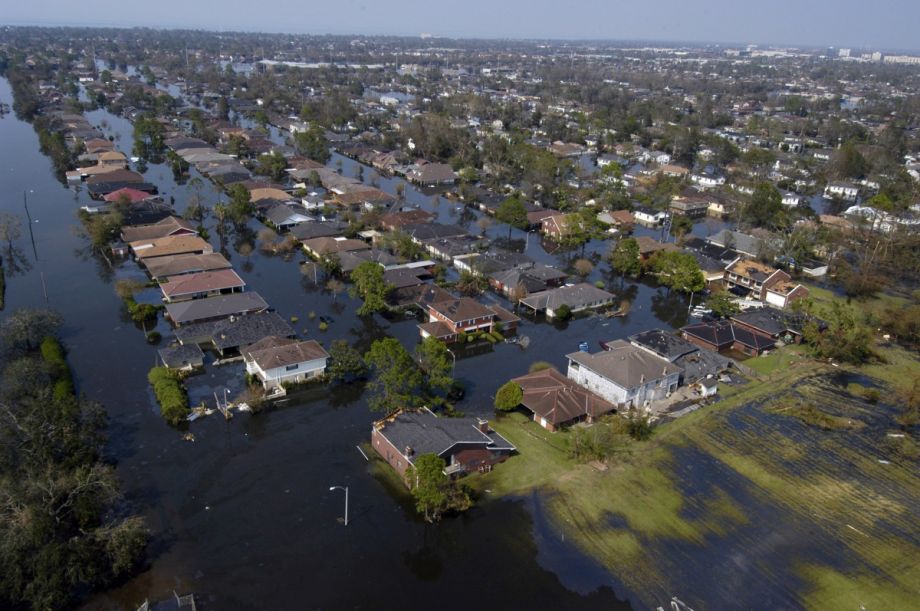
Ten years after Hurricane Katrina devastated New Orleans, above, PRI has created an audio tool to present stats about impending coastal flooding. (U.S. Navy Photo by Gary Nichols)
Can a musical approach grab America’s attention about the impending effects of climate change? The folks at Public Radio International are willing to try. The news outlet has created an infectious visual/audio tool by mashing up data from this report on rising sea levels by the Union of Concerned Scientists and Vanilla Ice’s “Ice Ice Baby.”
Here’s PRI’s explanation:
We’re using sound and video to illustrate the projected floods.
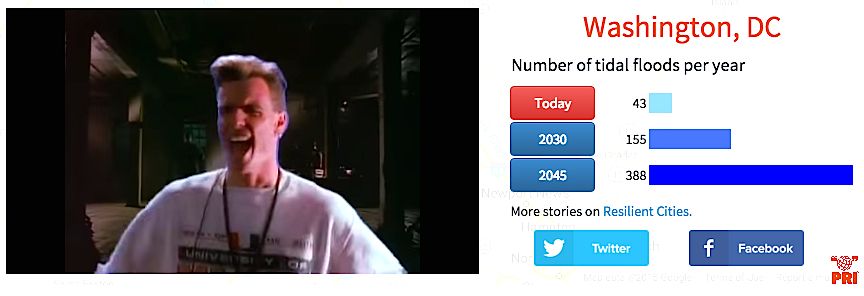
Think of the number of tidal floods as the tempo of a song, say Vanilla Ice’s rap single “Ice Ice Baby.” The number of floods that we experience today might look normal, and this is represented by “Ice Ice Baby” played at its normal tempo. Now try this: for every increase of 10 floods in a year, speed up the song by one second.
Users can click to hear the tune in “present day time,” and then project forward to 2030 and 2045. The more flooding, the faster the song plays. And yes, there’s video. You can hear for yourself here. It may seem a bit silly, and Vanilla Ice might not be the first artist who comes to mind when you think “public radio,” but it’s pretty effective.


A new PRI tool uses “Ice Ice Baby” to let users “hear” the sound of the future of urban U.S. flooding.
PRI reports, “[The study] projects how many tidal floods will hit 52 locations along the East and Gulf Coasts in the next 30 years. The numbers are pretty gruesome. For example, Washington, D.C. will face 388 tidal floods in a year in 2045, a nine-fold increase from the current 43 tidal floods a year. Key West, Florida, might lose its charm in 2045 when the number of tidal floods are projected to skyrocket 71 times from 3 in a year to 212.

Sunday, August 16, 2015

How many floods will these American cities have in 2030, 2045? | Public Radio International


flood-florida.jpg


Tyron Charles makes his way to a friend's house in the Kelly Ave Basin area in Pensacola, Florida, May 2, 2014. A state of emergency was declared on Wednesday in Pensacola's Escambia County after being inundated by as much as two feet of relentless rain over a 24-hour period, as severe thunderstorms raced across the northern part of the state.
Credit: 

Michael Spooneybarger


We know now that America's East and Gulf Coasts will be flooding more in upcoming years because of climate change. But how much? And how do you show that in a way that people can understand?
That's what we're trying to do, with Vanilla Ice, in this data visualization app. We use data from this report, which may carry greater resonance on the 10th anniversary of the Katrina disaster and just weeks after President Barack Obama's new initiative on climate change. Here's how much more often these American cities will be flooded.
Wait, Vanilla Ice? We're using sound and video to illustrate the projected floods.
Learn about how New Orleans has changed since Hurricane Katrina.
Think of the number of tidal floods as the tempo of a song, say Vanilla Ice's rap single "Ice Ice Baby." The number of floods that we experience today might look normal, and this is represented by "Ice Ice Baby" played at its normal tempo. Now try this: for every increase of 10 floods in a year, speed up the song by one second. How fast will the song be when the number of floods hit 388 a year (Washington DC in 2045)? 
The report was released in October by the Union of Concerned Scientists, a nonprofit science advocacy organization. It  projects how many tidal floods will hit 52 locations along the East and Gulf Coasts in the next 30 years. The numbers are pretty gruesome. For example, Washington DC will face 388 tidal floods in a year in 2045, a nine-fold increase from the current 43 tidal floods a year. Key West, Florida, might lose its charm in 2045 when the number of tidal floods are projected to skyrocket 71 times from 3 in a year to 212. 
A note on data: The numbers of tidal floods today represent the number of times that tide heights, as measured at the nearest NOAA tide gauge, exceed local water level thresholds that have been established by the Weather Forecast Offices of the National Weather Service as triggering local flood conditions. These figures are an annual averge, based on the five-year period from 2009 to 2013. The 52 locations were selected by the study based on whether the flooding thresholds, defined at the gauges, correlate well with coastal flood advisories issued by the National Weather Service. For simplicity, PRI.org further reduced the number to 29 by removing locations that are close to each other. 

Sunday, December 14, 2014

Australian circus star teaches her skills in birth country Ethiopia

Australian circus star teaches her skills in birth country Ethiopia


Date
  • 7 reading now

Colin Cosier

Circus star goes full circle

Sosina Wogayehu used to perform with Circus Oz and was a finalist for Young Australian of the Year, but now she trains young performers in the Ethiopian capital, Addis Ababa.
Australian circus star Sosina Wogayehu's Ethiopian circus school might be free for her students but she insists it's not charity.
"We don't really want to be an aid organisation, we want to build a career for these young people," says the former Circus Oz contortionist.
Earlier this year Wogayehu, 35, pursued her dream to train the next generation of Ethiopian acrobats and opened the Gamo Circus School of Ethiopia in the capital, Addis Ababa.
Australian circus star Sosina Wogayehu at her Gamo Circus School of Ethiopia in the capital, Addis Ababa.
Australian circus star Sosina Wogayehu at her Gamo Circus School of Ethiopia in the capital, Addis Ababa. Photo: Colin Cosier
Wogayehu's students learn juggling, acrobatics and other classic circus skills but a lack of safety mats and a dedicated space limits what can be  taught. The school is allowed the free use a government-owned community hall because Wogayehu doesn't charge her students, but it means her class is often displaced when the hall is double-booked.
Advertisement
Wogayehu hopes to one day have her own space where she can rig a trapeze. She provides free classes in the hope that her students find success in international circus acts, at which point she'll take an agent's fee.
"So by building this career and getting them employment around the world, we can support our school," she says.
Ethiopian circus students Azalech Sino (right), Kidist Kashemo (left) and Wintana Geberemeskel from Sosina Wogayehu's circus school have received a month-long dance scholarship in Australia.
Ethiopian circus students Azalech Sino (right), Kidist Kashemo (left) and Wintana Geberemeskel from Sosina Wogayehu's circus school have received a month-long dance scholarship in Australia. Photo: Jay Court
After almost a year in operation, Wogayehu helped secure two-year jobs for four of her students with the UniverSoul Circus in Atlanta, US. Three of the girls needed to polish their dancing, so Wogayehu arranged for Australian visas and secured them a month-long scholarship at the Lee Academy dance and performing arts school on the Central Coast where they'll be taught by dance directors Jasmine George and Jo Cotterill.
The three young women: Wintana Geberemeskel, 16, Azalech Sino, 19, and Kidist Kashemo, 21, say they're excited about seeing the beach on their first trip away from their land-locked country.
The 35-year-old's own journey from Ethiopia to Australia and from performer to teacher is as dramatic as her acts. Born in Addis Ababa, Wogayehu was a street cigarette vender before becoming a national child gymnastics champion at the age of nine. Later, and as a member of Ethiopia's first childrens' circus act, she sought asylum in Australia with 15 others in her company while on a world tour in 1998.
Australian circus star Sosina Wogayehu offers free classes at her Gamo Circus School of Ethiopia in Addis Ababa.
Australian circus star Sosina Wogayehu offers free classes at her Gamo Circus School of Ethiopia in Addis Ababa.Photo: Colin Cosier
She was later a pioneering graduate from the National Institute of Circus Arts in Melbourne before she was picked up by the famed company Circus Oz.
Wogayehu spent seven and a half years touring the world with Circus Oz, specialising in contortion but also performing juggling, trapeze and tightrope walking.
She was a 2004 Young Australian of the Year finalist. Wogayehu brought her two young children to live with her in Addis Ababa while her husband supports her from Melbourne.